Marine Insurance Claim Boat Repair in Melbourne, Florida
When your boat is damaged, Top Notch Marine can inspect the loss, document repair-related damage, prepare a detailed repair estimate, communicate technical repair information to the insurance company, and complete authorized marine repairs.
Experienced Help After Your Boat Is Damaged
A boating accident, grounding, collision, storm, falling object, or trailer incident can be stressful. In addition to protecting your boat from further damage, you may need photographs, a detailed repair estimate, an insurance inspection, technical documentation, and communication among several different parties.
Top Notch Marine specializes in marine insurance-related repairs for boat owners throughout Melbourne, Palm Bay, Sebastian, Vero Beach, Orlando, Daytona Beach, Florida’s Space Coast, and surrounding Central Florida communities.
Our role is to evaluate and document the physical damage, explain the necessary repair procedures, provide repair estimates, communicate repair-related information, and complete authorized repairs. Your insurance carrier remains responsible for investigating the claim and making coverage and payment decisions.
Types of Marine Insurance Damage We Repair
Boat damage can affect far more than the most visible impact point. Our team evaluates the affected components and surrounding areas to develop an appropriate repair plan.
Collision and Impact Damage
Collisions with another boat, dock, piling, seawall, fixed object, or floating debris can damage gelcoat, fiberglass, hardware, rub rails, decks, hull sides, and internal reinforcement.
Grounding and Underwater Damage
Sandbars, rocks, submerged objects, and shallow-water groundings can damage the hull bottom, keel, running surfaces, underwater gear, and surrounding fiberglass. Some damage may not be readily visible while the boat is in the water.
Storm and Wind Damage
High winds, heavy weather, flying debris, broken dock lines, and contact with nearby boats or structures can produce several different types of damage during the same event.
Trailer and Transportation Damage
Improper loading, equipment failure, shifting loads, road debris, trailer contact, and transportation incidents may damage the hull, keel, chines, transom, rub rail, or other exterior components.
Hull, Deck and Structural Damage
An impact may extend below the gelcoat into the fiberglass laminate, core, stringers, transom, deck, or reinforcement areas. Proper inspection helps define the repair scope.
Cosmetic and Finish Damage
Covered losses may involve gelcoat cracks, scratches, gouges, chips, punctures, oxidation caused by the event, or damage to painted and finished fiberglass components.
Our Marine Insurance Repair Process
Every claim and repair is different, but the following process helps organize the inspection, documentation, authorization, and repair work.
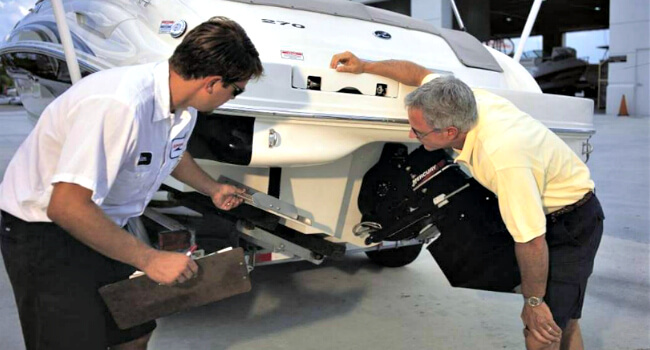
Damage Inspection
We inspect the boat and affected areas to identify visible damage and determine whether additional examination or disassembly may be necessary.
Repair Documentation
We document the physical damage, prepare photographs as appropriate, and develop a detailed estimate describing the proposed labor, materials, parts, and repairs.
Technical Coordination
With the boat owner’s authorization, we can provide estimates and repair-related information to the insurer, adjuster, surveyor, or other authorized claim representative.
Authorized Repairs
After the repair scope and financial responsibility are confirmed, our team schedules and performs the authorized repairs.
Detailed Damage Documentation and Repair Estimates
A quality marine repair estimate should explain what is damaged, what must be repaired or replaced, and what labor, parts, and materials are expected to be required.
Photographs alone may not reveal the full extent of fiberglass, structural, or concealed damage. Depending on the loss, an accurate estimate may require an in-person inspection, hauling the boat, removing damaged components, or limited disassembly authorized by the appropriate party.
Our repair documentation is designed to provide clear technical information about the boat’s condition and the proposed repair—not to interpret your insurance policy or determine whether a loss is covered.
What Happens If Additional Damage Is Discovered?
Some marine damage cannot be fully identified during the initial exterior inspection. Cracked fiberglass, wet or crushed core material, damaged reinforcement, hidden wiring problems, broken mounting surfaces, or compromised components may be discovered after disassembly begins.
When additional damage is found, we stop work in the affected area as appropriate, document what was discovered, revise the repair estimate, and provide the new repair-related information to the owner and authorized claim representative.
Additional work is not automatically covered simply because it was discovered during the repair. The insurer determines whether supplemental damage is covered under the applicable policy.
What to Do After Your Boat Is Damaged
Your personal safety comes first. After everyone is safe, take reasonable steps to prevent additional damage without putting yourself or others at risk.
- Notify emergency or law-enforcement authorities when appropriate
- Report the incident to your insurance carrier promptly
- Take photographs and videos from several safe angles
- Record when, where, and how the damage occurred
- Preserve damaged parts and available evidence
- Avoid permanent repairs before the insurer can inspect the loss
- Follow the insurer’s instructions for protecting the boat
- Arrange a professional marine damage inspection
Prevent Additional Damage Safely
Temporary measures may be necessary to protect the boat, but avoid unsafe work or permanent alterations before the damage has been documented. Keep photographs, invoices, receipts, towing records, storage charges, and other claim-related information.
Information to Bring to Your Inspection
Providing complete information can help us evaluate the boat and communicate the proposed repair more efficiently.
- Boat year, make, model, and hull identification number
- Date, location, and description of the incident
- Insurance company and claim number
- Adjuster or claim representative’s contact information
- Photographs or videos taken after the incident
- Police, accident, towing, or incident reports
- Insurance estimate or marine survey, if available
- Relevant maintenance or previous repair records
Professional Fiberglass and Gelcoat Repair
Many marine insurance losses involve damage to a boat’s fiberglass laminate, gelcoat finish, hull, deck, console, transom area, swim platform, or other molded components.
Top Notch Marine provides professional fiberglass reconstruction, gelcoat repair, color matching, hull restoration, cosmetic refinishing, and surface protection.
Learn more about our boat fiberglass and gelcoat repair services →
Why Choose Top Notch Marine?
Top Notch Marine has served Florida boaters since 1987. Our experience reaches beyond surface-level cosmetic work. We understand boat construction, marine systems, fiberglass repair methods, and the importance of identifying damage that may extend beyond the visible impact area.
We work to keep owners and authorized claim representatives informed about the condition of the boat, proposed repair procedures, discovered damage, and progress of authorized repairs.
- Serving Florida boaters since 1987
- Marine damage inspections and repair estimates
- Detailed repair-related documentation
- Communication with authorized claim representatives
- Professional fiberglass and gelcoat repair
- Hull, deck, cabin, and component repair
- Supplemental damage documentation
- Convenient Melbourne, Florida location
Important Insurance Information
Top Notch Marine is a marine repair facility—not your insurance company, insurance agent, attorney, or public adjuster. We do not interpret insurance policies, negotiate insurance coverage or settlements on behalf of a policyholder, or guarantee that any repair will be covered or paid by an insurer.
Coverage, deductibles, depreciation, claim payments, repair authorization, and other insurance decisions are determined by the insurer under the applicable policy. The boat owner remains responsible for deductibles, noncovered work, upgrades, storage, transportation, and any other amounts not paid by the insurer.
Our services focus on inspecting physical damage, preparing repair estimates, documenting repair-related findings, communicating technical repair information, and performing authorized marine repairs.
Frequently Asked Questions
Does Top Notch Marine handle boat insurance repairs?
Yes. We inspect marine damage, prepare repair estimates, document physical findings, communicate repair-related information to authorized claim representatives, and complete authorized boat repairs.
Can you communicate with my insurance adjuster?
With your authorization, we can provide the adjuster or insurer with estimates, photographs, repair procedures, parts information, and other technical documentation related to the proposed repair. We do not adjust the claim or negotiate insurance coverage on your behalf.
Do you determine whether my boat damage is covered?
No. Insurance coverage is determined by your carrier under the terms, conditions, limitations, and exclusions of your policy. We evaluate the physical damage and explain the repairs that may be required.
What if additional damage is found during the repair?
We document the additional findings, update the repair estimate, and provide the information to the boat owner and authorized claim representative. The insurer determines whether supplemental damage is covered.
Can you estimate marine damage from photographs?
Photographs can help with an initial review, but significant fiberglass, structural, mechanical, or concealed damage normally requires an in-person inspection before an accurate estimate can be prepared.
Who is responsible for the insurance deductible?
The boat owner is responsible for the applicable deductible and any repair, upgrade, storage, transportation, or other charges that the insurance company does not pay.
Should I repair the boat before the insurance inspection?
Take reasonable and safe temporary measures to prevent additional damage, but contact your insurer before authorizing permanent repairs. Follow the carrier’s instructions and preserve photographs, damaged parts, invoices, and receipts.