Selecting the Correct Trolling Motor Shaft Length
Choosing the proper trolling motor shaft length is essential for getting reliable, quiet, and efficient performance on the water. At Top Notch Marine, we help Florida boaters pick the perfect trolling motor for center consoles, bay boats, skiffs, pontoons, and offshore rigs. The goal is simple: ensure the prop stays at least 12 inches below the waterline—deep enough for maximum thrust and quiet operation, even when the bow rises in chop or current.
A shaft that’s too short causes cavitation, noisy prop bursts, and major power loss. A shaft that’s too long can sit awkwardly when stowed, rise above the bow rail, or interfere with deck space. When in doubt, choose the longer option—just be sure your bow has space for the stowed motor.
Shaft Length Measurement for Bow-Mounted Trolling Motors
Bow-mount motors are more sensitive to proper shaft length because bow heights vary significantly, especially on modern center consoles and bay boats. To measure:
- Measure from the bow’s mounting surface straight down to the waterline.
- Add 23″–25″ for most small and midsize boats in calm conditions.
- If you regularly fish rough or open water, add 27″–30″ for extra submersion.
- Offshore center consoles from 22–30 feet often require 30″–40″ of added length due to high freeboard.
For large offshore rigs, motors with 72″–100″+ shafts are becoming more common. Longer shafts help keep Spot-Lock accurate and prevent cavitation when the bow rises through swell.
If operating a hand-control motor while standing, add 12″ for comfort—or use an extension handle.
How to Measure Bow to Waterline Correctly
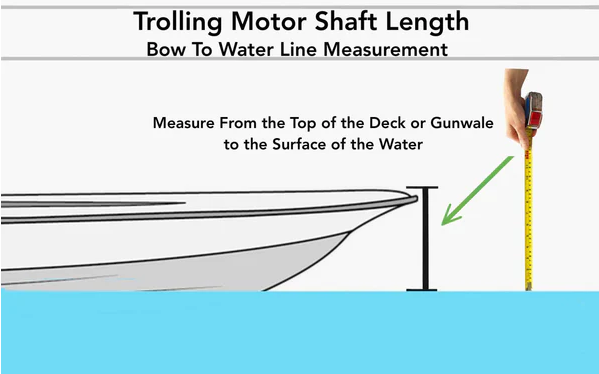
Minimum Recommended Trolling Motor Shaft Length
| Bow-to-Waterline | Recommended Shaft |
|---|---|
| 0″–10″ | 36″ |
| 16″–22″ | 45″ |
| 22″–28″ | 48″–52″ |
| 28″–34″ | 54″–60″ |
| 34″–52″ | 72″–87″ |
| 52″–72″ | 100″ |
Transom-Mounted Shaft Length
While transom motors are more forgiving, measuring correctly still matters.
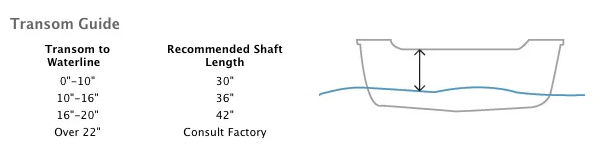
Trolling Motor Shaft Length Measurement Tips
Accurate measuring prevents cavitation, noise, and reduced run-time. Keep these tips in mind:
- Take measurements in calm water.
- Measure under realistic load—fuel, batteries, gear, and passengers affect bow height.
- Consider the weight of the motor and batteries; they can shift the trim of the boat.
- Stay stable—falling in while measuring is optional but not recommended.
Image Placeholder: “Don’t fall in” graphic
Important Rules to Remember
Submersion Rule
Your trolling motor’s lower unit should sit at least 12″ below the surface for smooth, quiet thrust. This prevents cavitation and keeps your boat tracking true.
Image Placeholder: Proper submersion depth
How to Measure the Shaft Length on Your Current Motor
Shaft measurements run from the base of the control head to the top of the lower motor housing. Variations in mounts mean this number is approximate. Always compare to manufacturer-rated shaft specs or measure bow-to-waterline for the most reliable result.
If you’re unsure, your local dealer—like Top Notch Marine—can tell you what shaft lengths are typically used on your specific boat model.
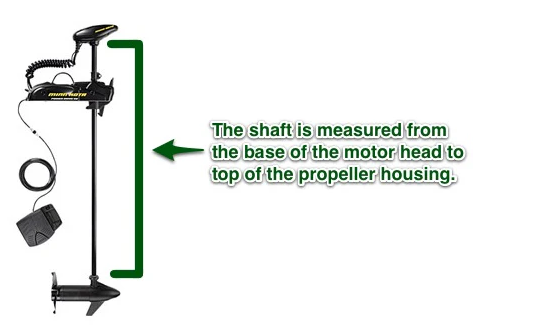
Why Correct Shaft Length Matters
A shaft that’s too short can’t be fixed—you can lower the motor only so far. Once a motor cavitates or loses thrust in real-world conditions, it’s too late. Ensuring the right length from the start keeps your boat stable, your trolling motor quiet, and your day on the water enjoyable.
Top Notch Marine is here to help you choose the perfect trolling motor for your center console, bay boat, pontoon, flats boat, or offshore vessel—always matched to Florida fishing conditions.