Top Notch Marine Boater’s Learning Center
What Is a Self-Bailing Boat?
Learn how a self-bailing cockpit moves rain and spray overboard, why some smaller boats use an automatic bilge pump instead, and which design may fit your Florida boating needs.
If you have been shopping for a center console, bay boat, fishing boat, skiff, deck boat, or other trailerable boat, you may have seen the term self-bailing cockpit. It sounds simple, but understanding what it does—and what it does not do—can help you choose the right boat and take better care of it.
A self-bailing design allows water that lands on the deck or cockpit floor to flow through drains and discharge outside the hull. The cockpit sole generally must sit high enough in relation to the outside waterline for gravity to move that water overboard.
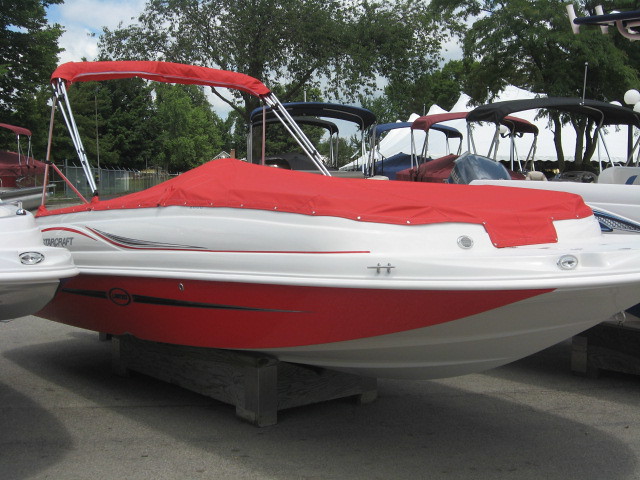
Cockpit height, hull design and interior freeboard all affect whether a smaller boat can use a self-bailing deck.
How Does a Self-Bailing Cockpit Work?
Self-bailing does not mean a crew member is scooping water out of the boat. It describes a drainage system built into the cockpit design.
Water Reaches the Deck
Rain, spray, washdown water or water brought aboard by passengers collects on the cockpit floor.
Water Finds the Drains
The deck is shaped so accumulated water moves toward cockpit drains or scuppers.
Gravity Moves It Overboard
The water travels through drain passages and exits through the transom or hull side.
What Are Boat Scuppers?
Scuppers are the openings or fittings that allow cockpit water to drain overboard. Depending on the boat, they may use flaps, balls or other check-style components intended to help reduce water flowing back into the cockpit.
Scuppers must remain clear. Leaves, fishing line, bait, packaging, dirt and other debris can reduce or completely stop drainage. Scupper components can also age, stick or become damaged and should be inspected regularly.
Understanding the Difference
Self-Bailing vs. Non-Self-Bailing Boats
Neither design is automatically right for every boater. Boat size, freeboard, passenger comfort, intended use, capacity and storage conditions all matter.
Self-Bailing Cockpit
The cockpit is designed to drain routine deck water directly overboard under appropriate operating and loading conditions.
- Uses deck drains or scuppers
- Primarily relies on gravity
- Useful for rain, spray and washdown water
- Common on many fishing and offshore-style boats
- Scuppers and drains still require inspection
- A bilge pump is still important
Non-Self-Bailing Cockpit
Water may drain into the bilge or another collection area, where an automatic electric bilge pump removes it from the boat.
- Can allow a lower cockpit floor
- May provide greater interior side depth
- Often found in smaller family-oriented boats
- Depends more heavily on pump and battery condition
- Benefits from a properly fitted mooring cover
- Requires regular inspection during storage
Why Aren’t All Boats Self-Bailing?
Boat design involves tradeoffs. On many smaller boats, raising the cockpit floor high enough to drain overboard can reduce interior depth or usable space. A manufacturer may instead choose a lower cockpit floor to create deeper interior sides and a more secure feeling for children, passengers and family boaters.
This can be particularly important in affordable deck boats and smaller family boats. A deep cockpit and higher interior freeboard can provide passenger comfort and confidence even though the boat may rely more heavily on an automatic bilge pump for rainwater management.
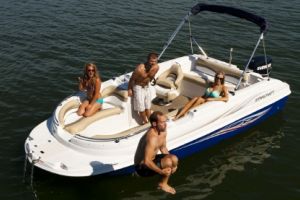
Smaller family boats may prioritize cockpit depth, passenger space and higher interior sides over a self-bailing floor.
Can Water Enter Through the Scuppers?
It can happen under some conditions. Heavy loading in the stern, passengers standing near the transom, improperly distributed weight, waves or damaged scupper components can place a drain closer to—or below—the outside waterline.
A small amount of temporary water near a stern drain may not always indicate a serious problem, but unexplained or persistent water should never be ignored. Check passenger and gear placement, inspect the scuppers and verify that the boat is loaded within its stated capacity.
Does a Self-Bailing Boat Still Need a Bilge Pump?
Yes. Self-bailing deck drains and bilge pumps perform different jobs. Scuppers handle water on the cockpit floor. The bilge pump handles water that reaches lower areas inside the hull.
Every owner should know where the bilge pump, float switch, discharge outlet, battery switch and drain plug are located. Test the automatic and manual pump functions according to the boat and equipment manufacturers’ instructions.
What If My Boat Is Not Self-Bailing?
A non-self-bailing boat can still be safe, practical and enjoyable when its systems are maintained and the boat is stored properly. Good ownership practices include:
Maintain the Bilge Pump
Test the pump and automatic float switch. Keep the pump inlet and bilge area clear of debris.
Protect the Battery
An automatic pump cannot provide dependable protection when the battery is discharged, disconnected or failing.
Use the Correct Cover
A properly supported mooring cover should shed rain over the boat’s sides instead of forming heavy water pockets.
Inspect the Boat Regularly
Check an in-water or exposed boat frequently—especially following storms or heavy Florida rainfall.
Is a Self-Bailing Boat Better?
A self-bailing cockpit offers a useful layer of water management, especially for fishing, offshore operation, washdowns and boats exposed to frequent rain. But it is only one part of the complete design.
A non-self-bailing family boat may offer deeper interior sides, comfortable seating, easy entry and excellent usable space. The better choice depends on how, where and with whom you expect to use the boat.
When comparing boats, look beyond a single feature. Consider stability, freeboard, capacity, seating, storage, drainage, bilge access, performance, engine choice, trailerability, warranty support and service after the sale.
Self-Bailing Boat Questions
Frequently Asked Questions
What does self-bailing mean on a boat?
It means the cockpit or deck is designed to drain accumulated water overboard through drains or scuppers, primarily using gravity.
Does a self-bailing boat remove all water automatically?
No. The system is designed to manage water on the deck under appropriate loading and operating conditions. Water below the cockpit may still require a bilge pump.
Does a self-bailing boat need a bilge pump?
Yes. Scuppers drain the cockpit, while the bilge pump removes water from lower areas inside the hull. Both systems should be inspected and maintained.
Why is water coming through my boat’s scuppers?
Possible causes include weight concentrated near the stern, excessive loading, waves, clogged drains, damaged scupper components or a drain sitting too close to the waterline. Persistent water should be inspected.
Can boat scuppers become clogged?
Yes. Leaves, bait, dirt, fishing line and other debris can restrict drainage. Check the drains and scuppers regularly and keep them clear.
Is a self-bailing boat better for Florida?
It can be beneficial because Florida boats encounter rain, spray and washdown water. However, the right boat also depends on passenger needs, intended use, storage, size, freeboard and the complete hull design.
Can I leave a non-self-bailing boat uncovered in the water?
Leaving any boat exposed requires careful monitoring. A non-self-bailing boat generally benefits from a properly fitted cover, a dependable automatic bilge pump, a healthy battery and frequent inspection.
Can Top Notch Marine help me choose the right boat?
Yes. Top Notch Marine can help you compare new and pre-owned boats based on your family, fishing, performance, storage, trailer and budget priorities. Call 321-253-4050 or visit us in Melbourne, Florida.
Find the Right Boat for Your Florida Adventures
Self-bailing is one valuable feature—but the right boat is the one that brings together safety, comfort, performance, usability and value for the way you plan to enjoy the water.
Top Notch Marine
6000 North U.S. Highway 1
Melbourne, Florida 32940
Serving Florida boaters since 1987
This article provides general boating information. Drainage systems vary by boat, model, loading condition and installation. Follow the boat and equipment manufacturers’ instructions and capacity limits. Have unexplained water intrusion, damaged scuppers or an unreliable bilge system inspected by a qualified marine professional.